
Introduction
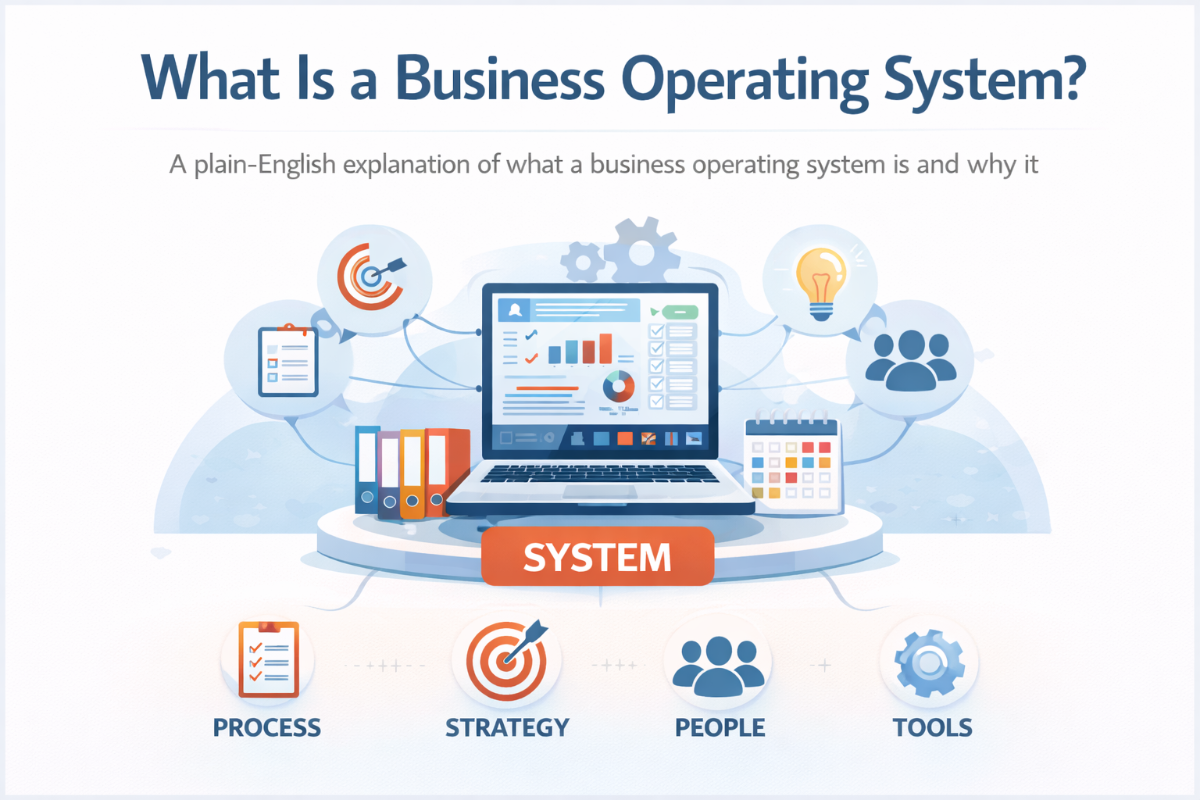
A business operating system (BOS) is what turns a business from chaos into structure.
Without it, everything depends on memory, effort, and guesswork.
Most Businesses Are Operating Without a System
If you're running your business off spreadsheets, memory, and scattered tools, you don’t have an operating system—you have effort.
- No clear KPI tracking
- No consistent reporting cadence
- No structured decision-making
This is why growth feels unpredictable—even when revenue is increasing.
What Is a BOS?
A Business Operating System is a framework that manages:
- Work
- Data
- Decisions
- Processes
Core Components
1. Work Management
- Tasks
- Projects
- Deliverables
2. Data Tracking
- KPIs
- Dashboards
- Reports
3. Decision Framework
- What to prioritize
- What to stop
- What to scale
4. Process Standardization
- Repeatable workflows
- Defined steps
Business Operating System Example
A small service business using a BOS might look like this:
- KPI Dashboard: Revenue, leads, conversion rate, CAC
- Weekly Reporting: Performance tracked and reviewed
- Decision Layer: Clear priorities based on data
- Process Layer: Standardized workflows for delivery
Instead of guessing, the business operates on visible signals.
Why It Matters
Without a BOS:
- Work is reactive
- Growth is inconsistent
With a BOS:
- Work becomes predictable
- Growth becomes intentional
Want to see what this looks like in your business? Request a qualification call.
How It Connects to Growth
A BOS allows you to:
- Track performance
- Identify bottlenecks
- Scale what works
How This Gets Implemented
A business operating system isn’t just a concept—it requires installation.
SevCorp installs KPI dashboards, telemetry tracking, and reporting systems directly into your website so your business becomes measurable and manageable.
- KPI dashboards and metrics tracking
- Revenue and acquisition visibility
- Monthly executive scorecards
Conclusion
A business without a system is just effort.
A business with a system becomes an engine.